

The History of Our Home and Glimpses from the Family Chronicle
from the Years 1910–1950
S.M. Anežka Novoměstská, Mgr., Ph.D.
How Did the School Sisters of St. Francis Come Here?
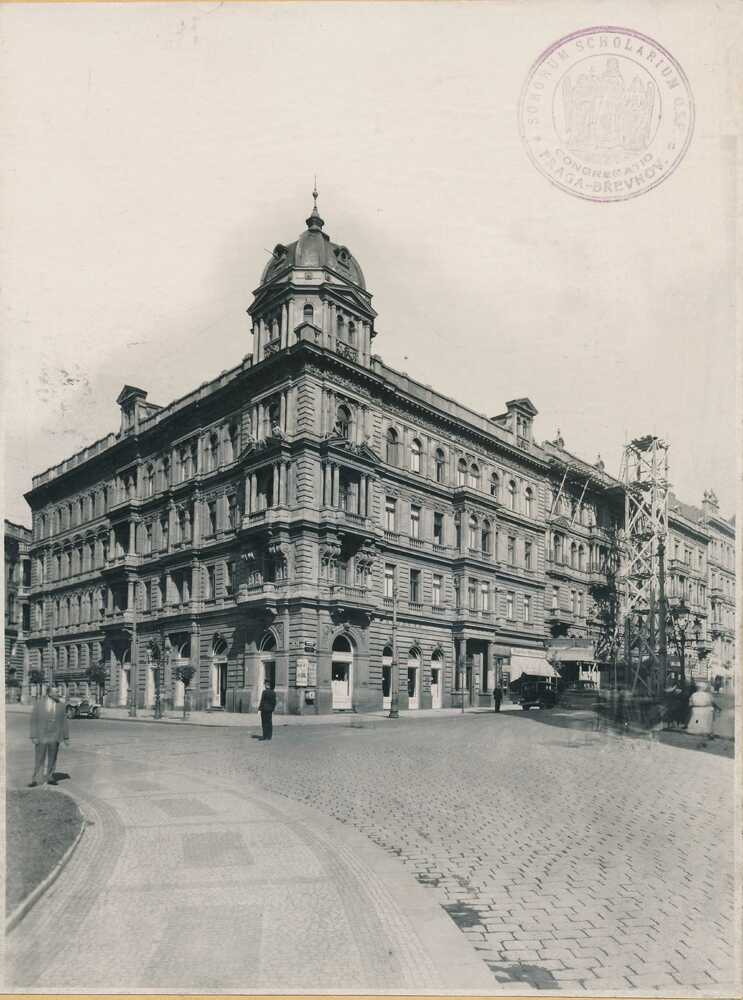
The history of the building at No. 585, which houses the Christian Youth Residence at St. Ludmila, has been linked to the Congregation of the School Sisters of St. Francis for over 100 years. This Congregation has its roots in Graz, Austria. In 1843, a teacher and Franciscan tertiary named Antonie Lamplová, together with the local bishop R. Š. Zängerl, founded a female religious community there, whose mission was primarily the upbringing and education of girls. The activities of the new Congregation soon spread to other parts of Austria-Hungary. From 1857, the sisters were also active in Česká Kamenice in northern Bohemia. Shortly afterwards, three sisters from the Zahálka family of Horní Sloupnice joined the Congregation in Graz, and in 1888 they transferred this religious community to Bohemia. With the support of Countess Stadion, they established the Czech Congregation of the School Sisters of St. Francis in Slatiňany near Chrudim.
The sisters' work in Bohemia grew rapidly: they taught and educated girls from nursery school through primary, civic, continuing, industrial, commercial, and sewing schools, all the way to the teacher training institute they founded in Chrudim. They also devoted themselves to educational work in various facilities for poor and sick children (shelters, orphanages, residential homes, and similar institutions).
The Grammar School on Korunní Street
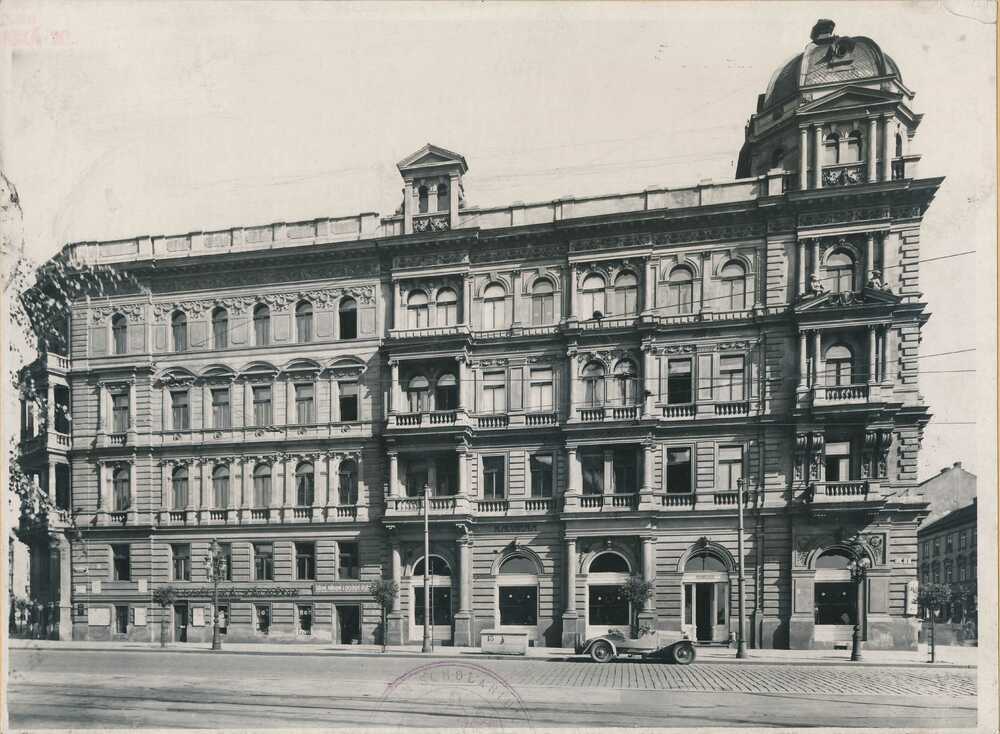
In 1905, responding to widespread demand from the Catholic public of the time, the Congregation founded a Girls' Grammar School in Prague's Vinohrady district. The school was located at Korunní Street No. 4. Interest in enrolment was strong, and so in 1906 the neighbouring building at No. 2 was purchased. The grammar school was able to develop further thanks to a Support Association that provided both financial and moral backing from 1908. Individual year groups of the eight-year grammar school were added gradually, and parallel classes were sometimes opened. The school also had a boarding house where some of the girls lived. In 1907, a two-year commercial school relocated from Chrudim into the grammar school building, and it too required accommodation for its students. The community of sisters who taught at the school, worked in the boarding house, and managed the running of the entire large "household" grew steadily. The insufficient space in the school building was expanded in 1910 by the addition of the neighbouring building at No. 585 (today No. 1 Francouzská Street), which served as a boarding house.
A Brief History of Our Building
Who designed and built the house, and in which year? Who lived in it? We may never know for certain. What is clear is that it came into existence around the middle of the 19th century. When it came into the ownership of the Congregation of School Sisters, a few tenants still occupied the first floor and ground floor. The remaining spaces were adapted for the accommodation of students and sisters. From that point on, the building permanently became a home for many generations of girls from all corners of the country. It survived the First World War and the period of crisis in the 1920s. Thanks to the ongoing demand for places at the grammar school and the commercial school, it was always fully occupied.
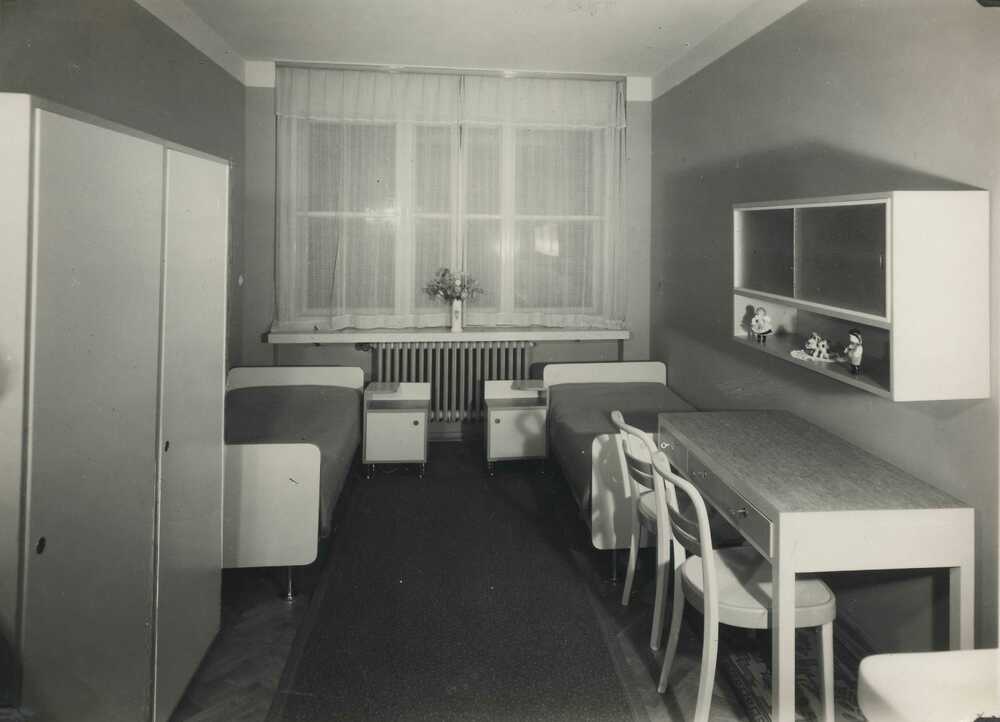
In 1938, as part of the construction of a new grammar school building, a fourth and fifth floor were added to the house. This considerably expanded the accommodation capacity. At that time, nearly a thousand students were studying at the school and 128 of them lived in the boarding house. The girls did not enjoy their beautiful new rooms for long, however.
The Second World War soon began, and from 1941 teaching at the grammar school was prohibited. In 1942 the remaining schools were closed as well, and the school building was requisitioned by the German Wehrmacht. The fifth floor of the boarding house was taken over by elderly residents from a Home for the Poor in Krč. They were shortly replaced by German female students, and the entire building was gradually converted into a German girls' boarding school. From January 1945 until the end of the war, the building served as a military field hospital. With the start of the 1945/46 school year, Czech students were once again able to return to both the school and the boarding house.
For several years the residence provided the girls with a peaceful and stable base. In the spring of 1949 the school was nationalised, and the religious sisters who served as teachers were forced to leave. Only a few sisters remained to care for the girls in the boarding house. At the end of August 1950, the boarding house too was seized by the state. In the night of 27 to 28 September 1950, the religious sisters were taken away to an internment camp in Krnov (they were subsequently forbidden from working in education and instead worked in factories, in the fields, in hospitals, in retirement homes, and with children with disabilities). Throughout the entire period of communist rule, however, the boarding house continued to serve girls studying in Prague. In 1991, the history of the building was once again united with the Congregation of the School Sisters of St. Francis.
Historical Photographs – Gallery
What Was Life Like in the Boarding House?
Are you curious about the girls who lived here? What did their rooms and the other spaces look like? Who looked after them? What opportunities did the resident students have to spend their free time? Let us take a look together at the old chronicle.
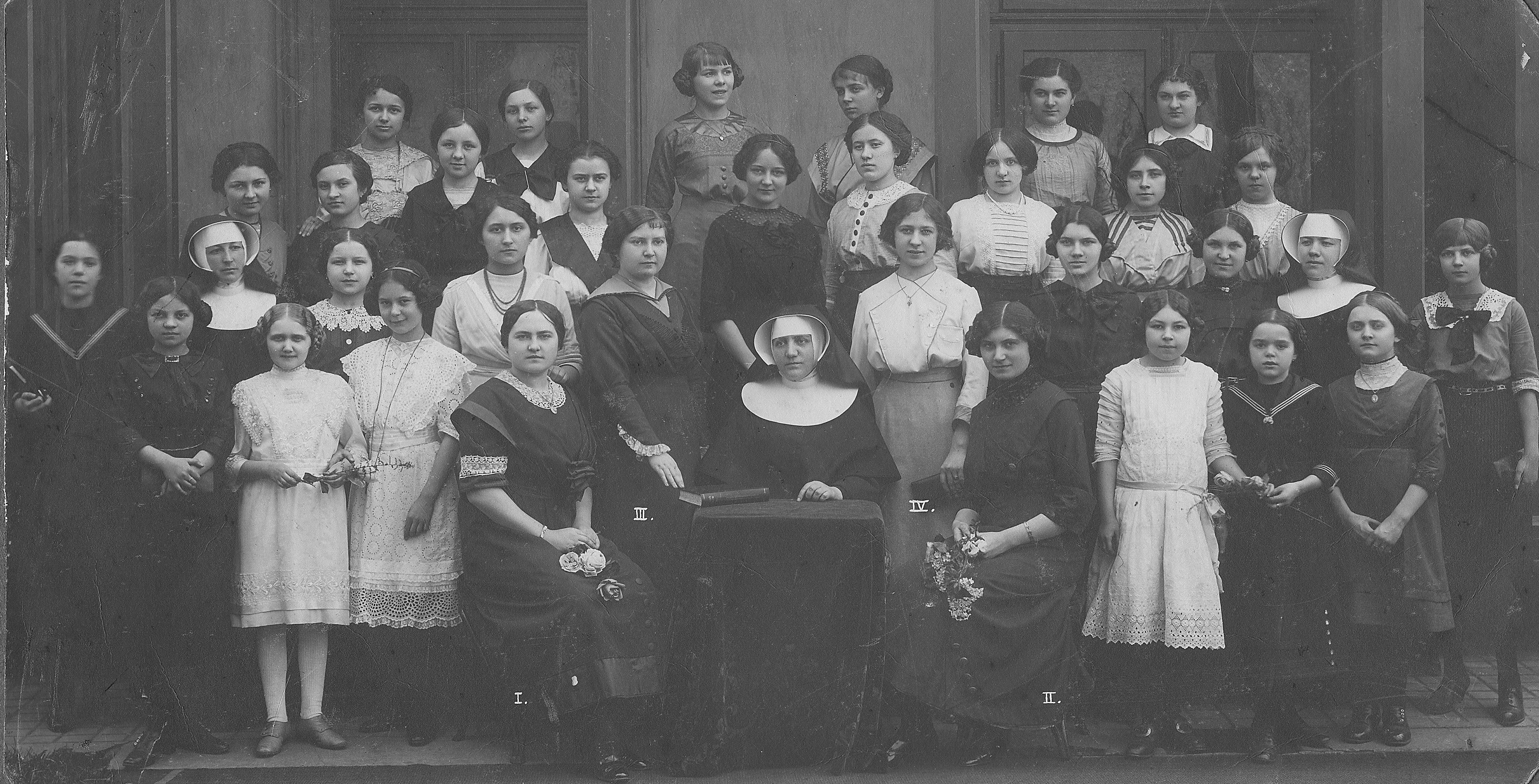
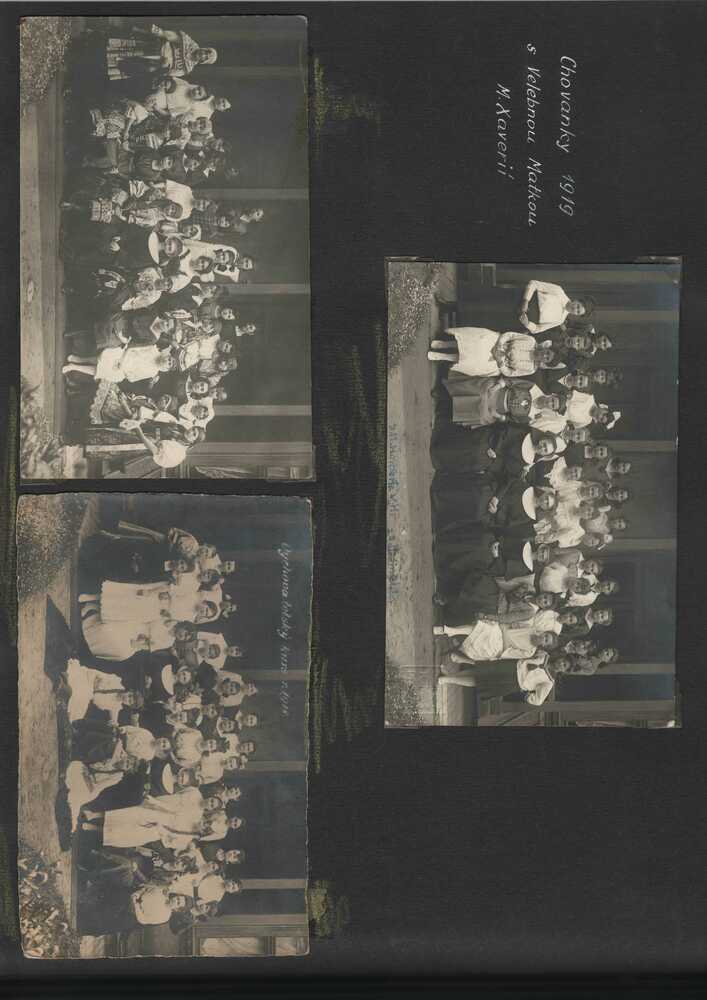
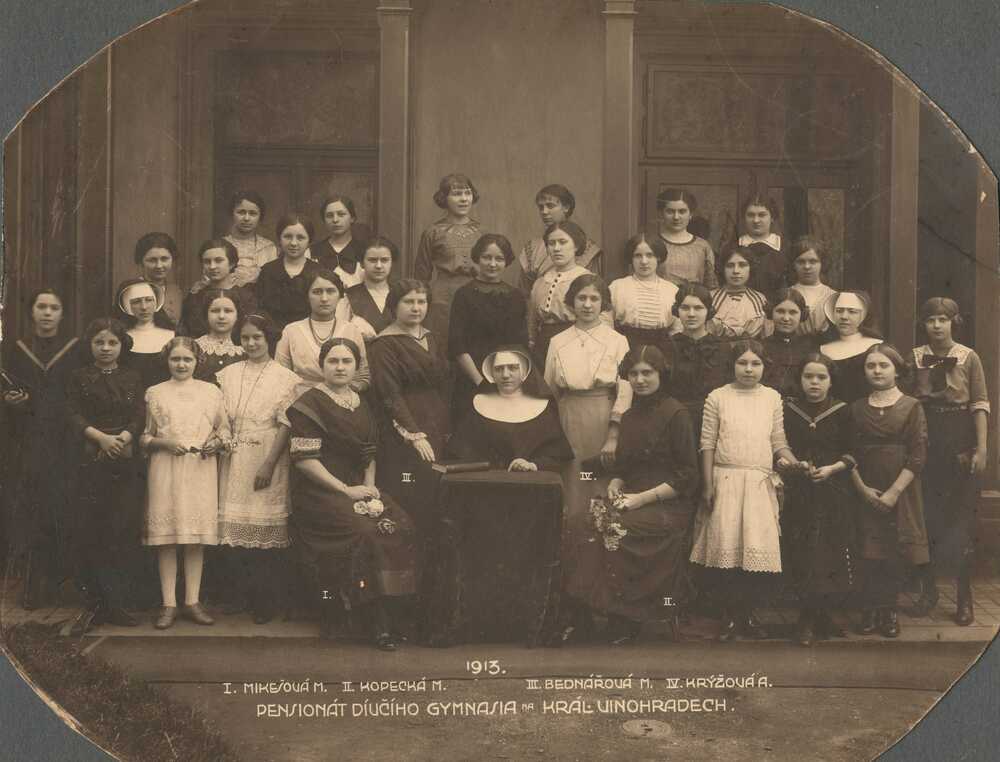
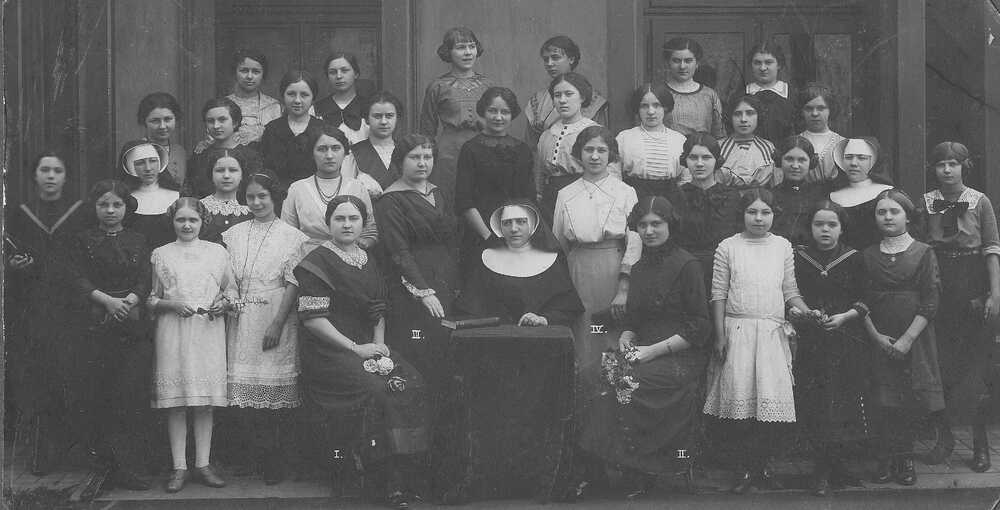
A group of girls with their supervisors, school year 1913/1914
Students
In the early years, the boarding house — known at the time as a pension — served only girls studying at the grammar school and commercial school of the School Sisters. Between 70 and 80 girls lived there. They had only a short distance to school — just a corridor and a few steps away. Later, students from the teacher training course were also accommodated there. From 1938, a number of pupils from primary and civic schools joined the residents as well. The top floor of the boarding house provided shelter for university students. In total, around 130 girls lived there.
Meals
The students had full board in the house, including morning and afternoon snacks. Meals were prepared by the sisters with the help of several lay staff. The kitchen was located in the grammar school building, where the girls had their own dining room. The café was not yet part of the residence at that time — it was run by private owners under the name "Republika". On the ground floor next to the entrance was a small grocery shop called "Koloniál", where the girls could pop in occasionally if they had a little spare change.
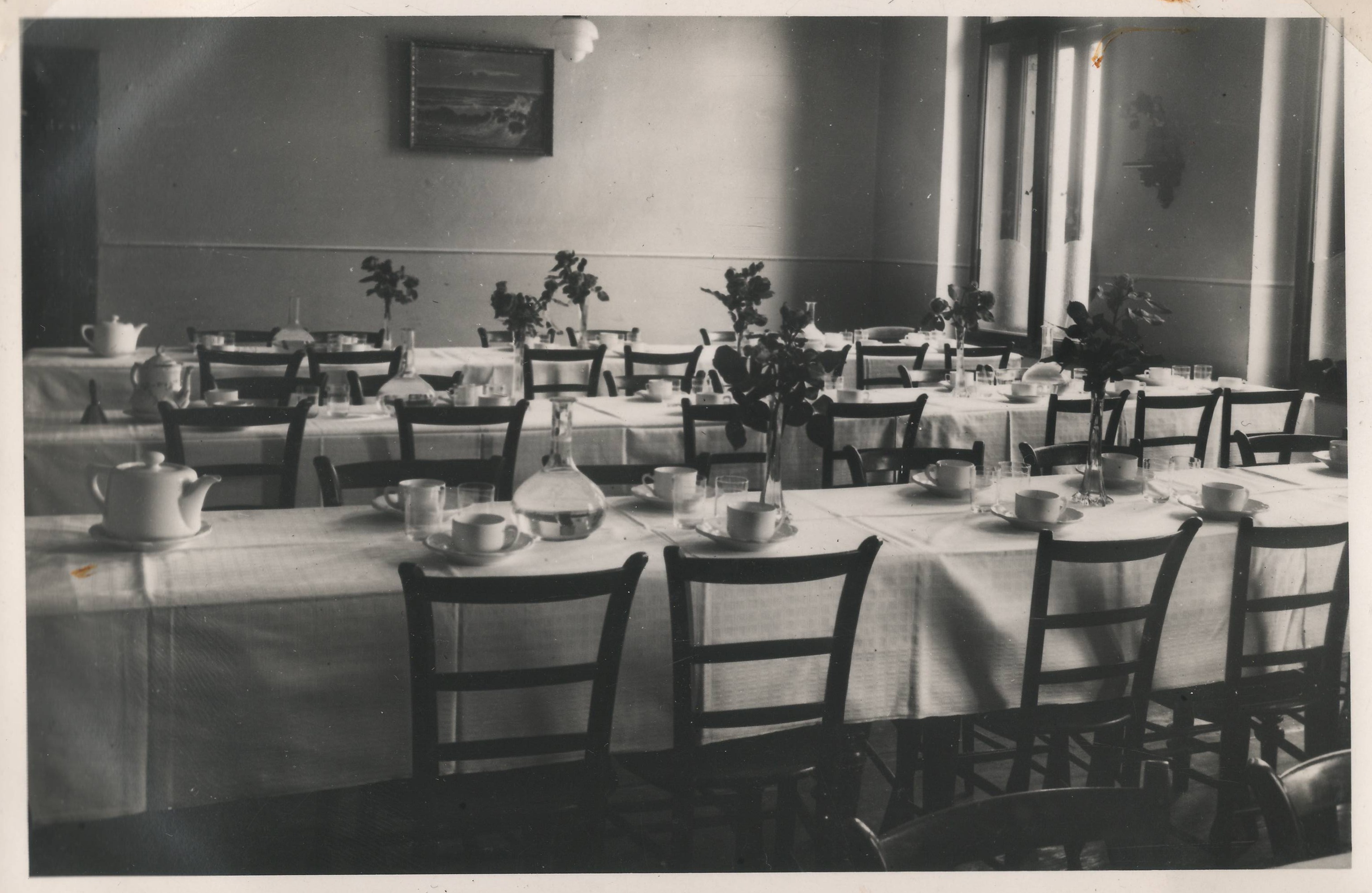
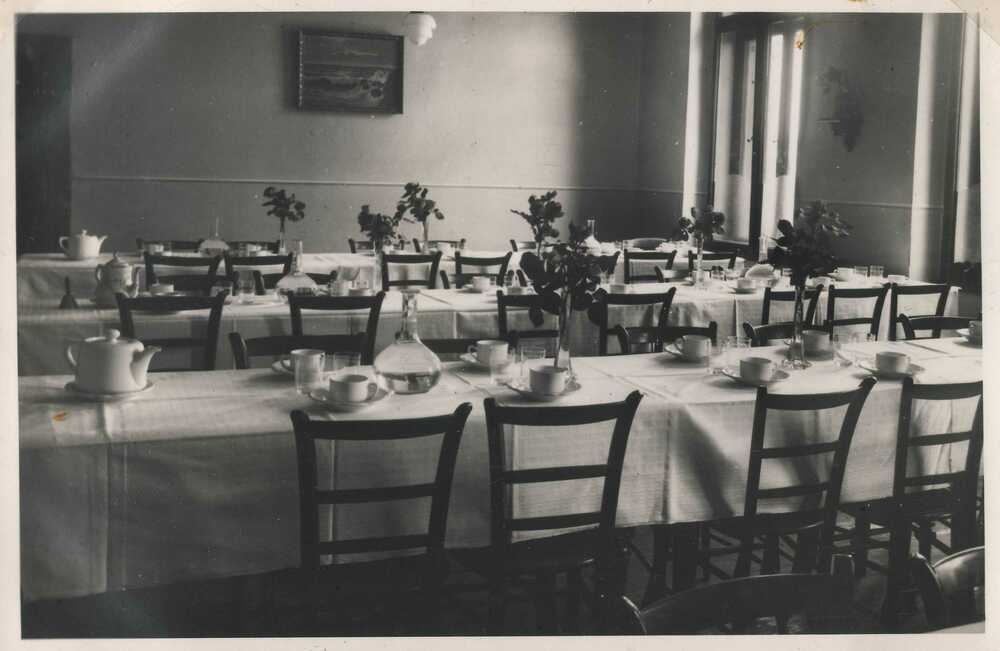
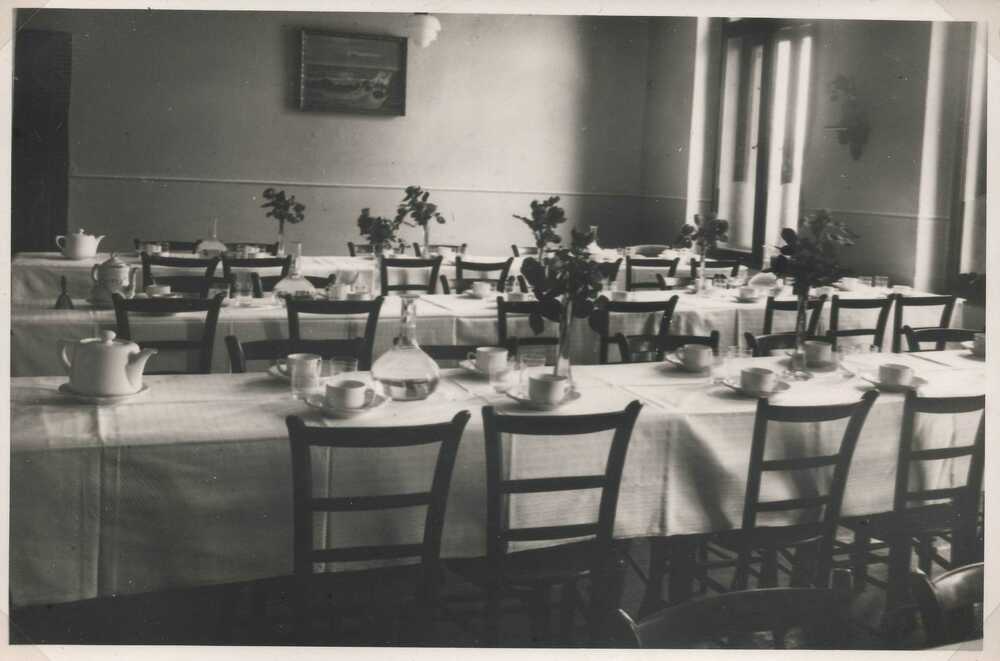
The dining room for resident girls
Rooms
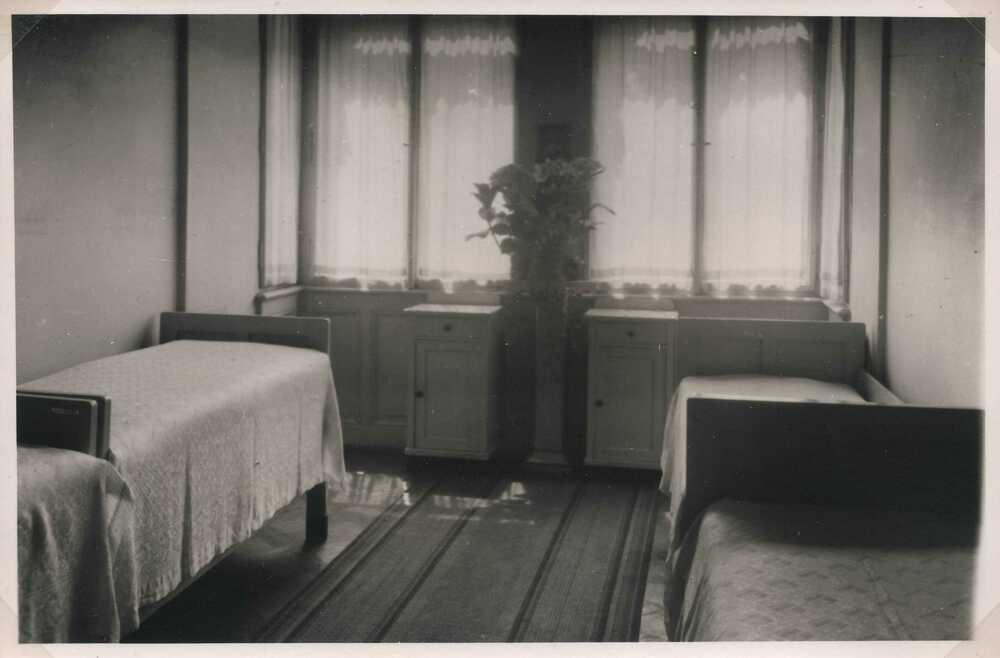
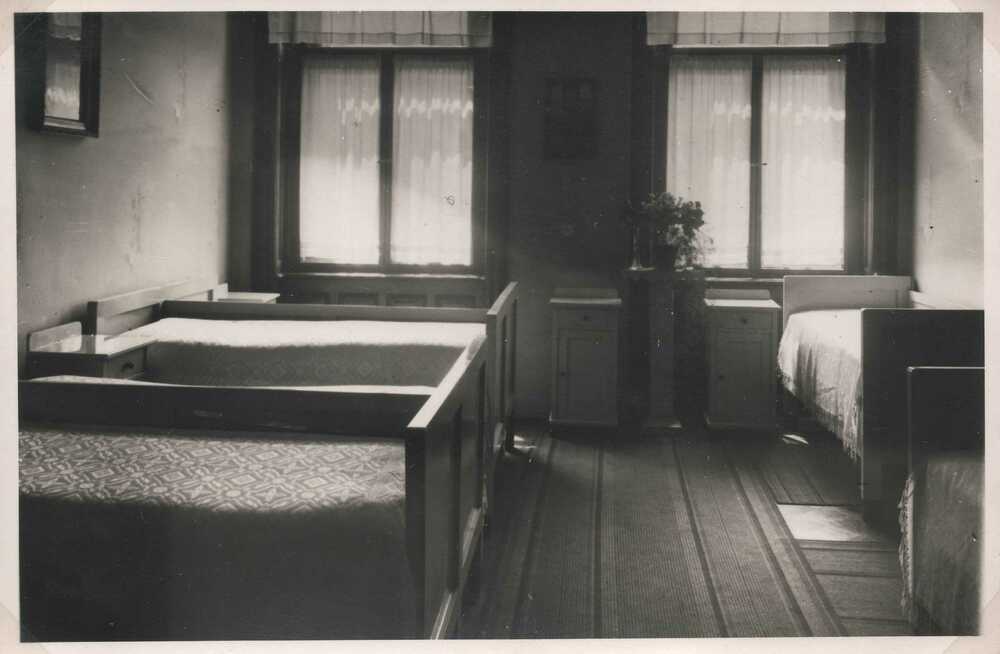
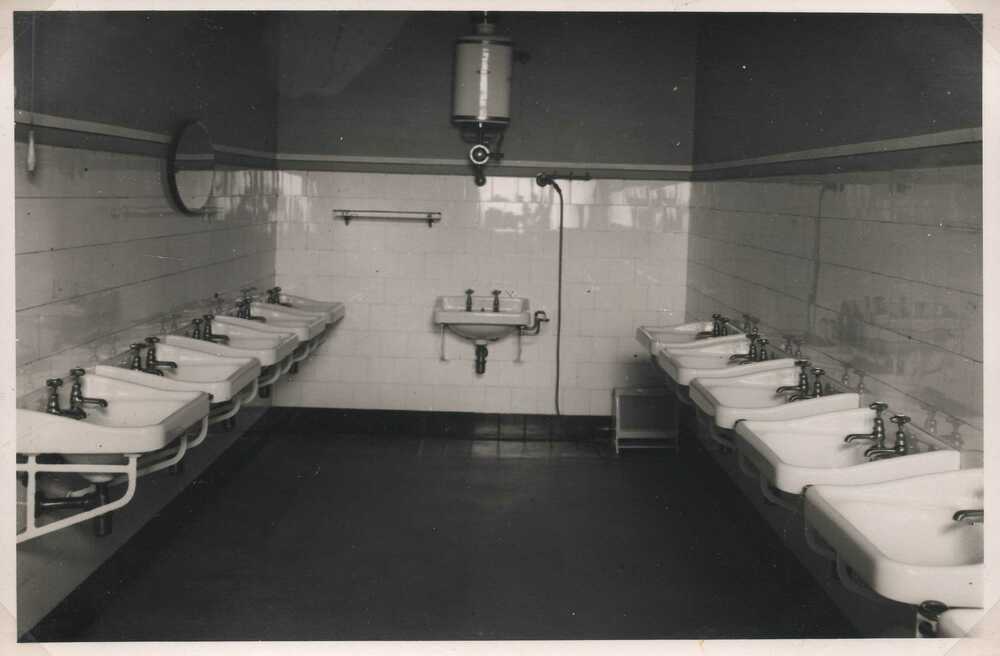
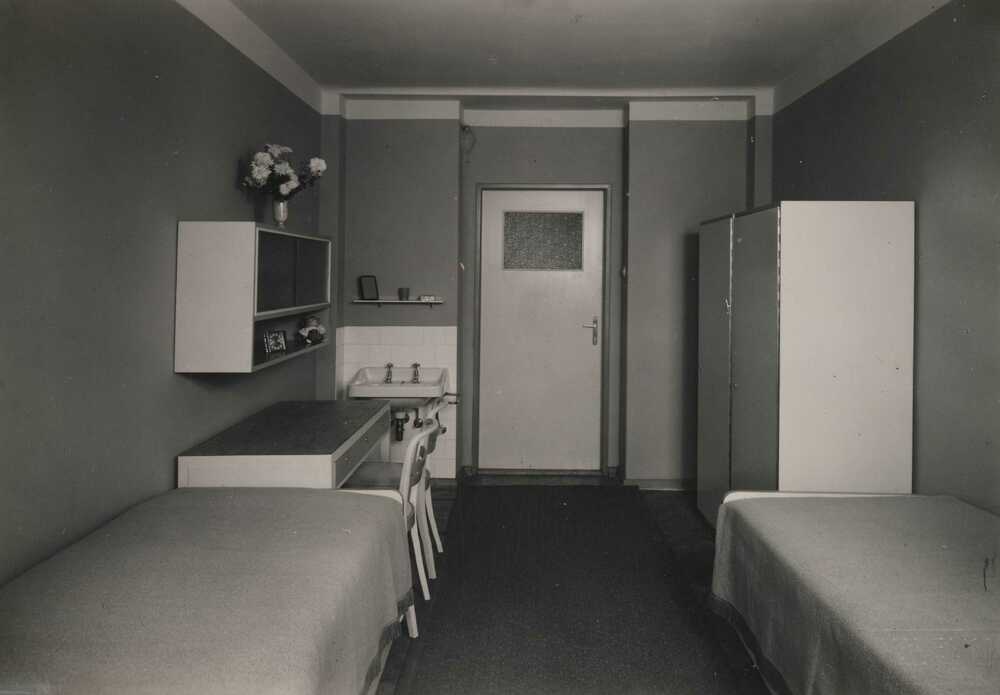
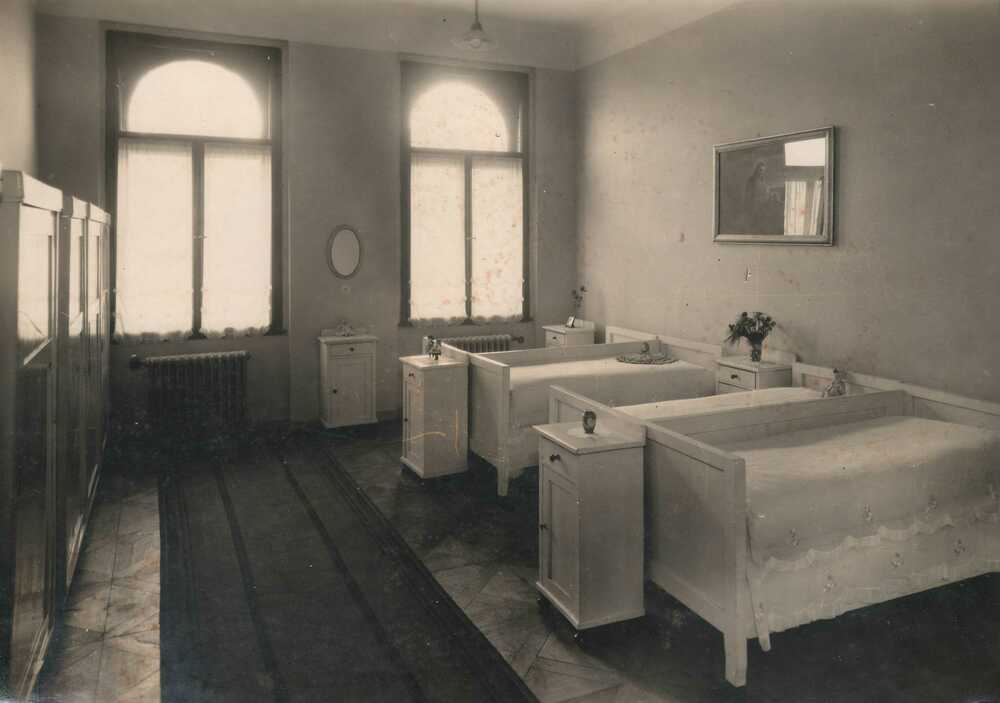
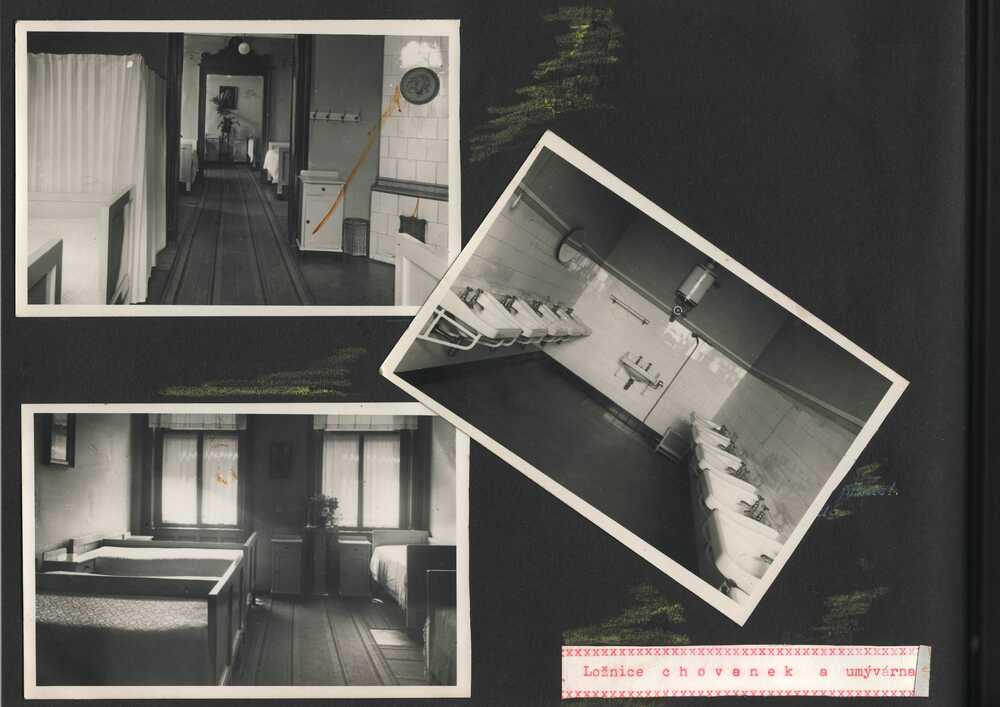
The rooms were practically furnished and always kept immaculately tidy — one wonders whether tidiness was formally assessed back then too. Each floor had a shared bathroom, though later a washbasin was also provided in the rooms. Washing machines were nothing like they are today. The house did have a laundry room, but the girls did not do their washing there. The common practice was to pack dirty laundry into a parcel and send it home to be washed (postage was quite affordable at the time). The girls did not go home every weekend as students do today — some saw their parents only two or three times during the entire school year.
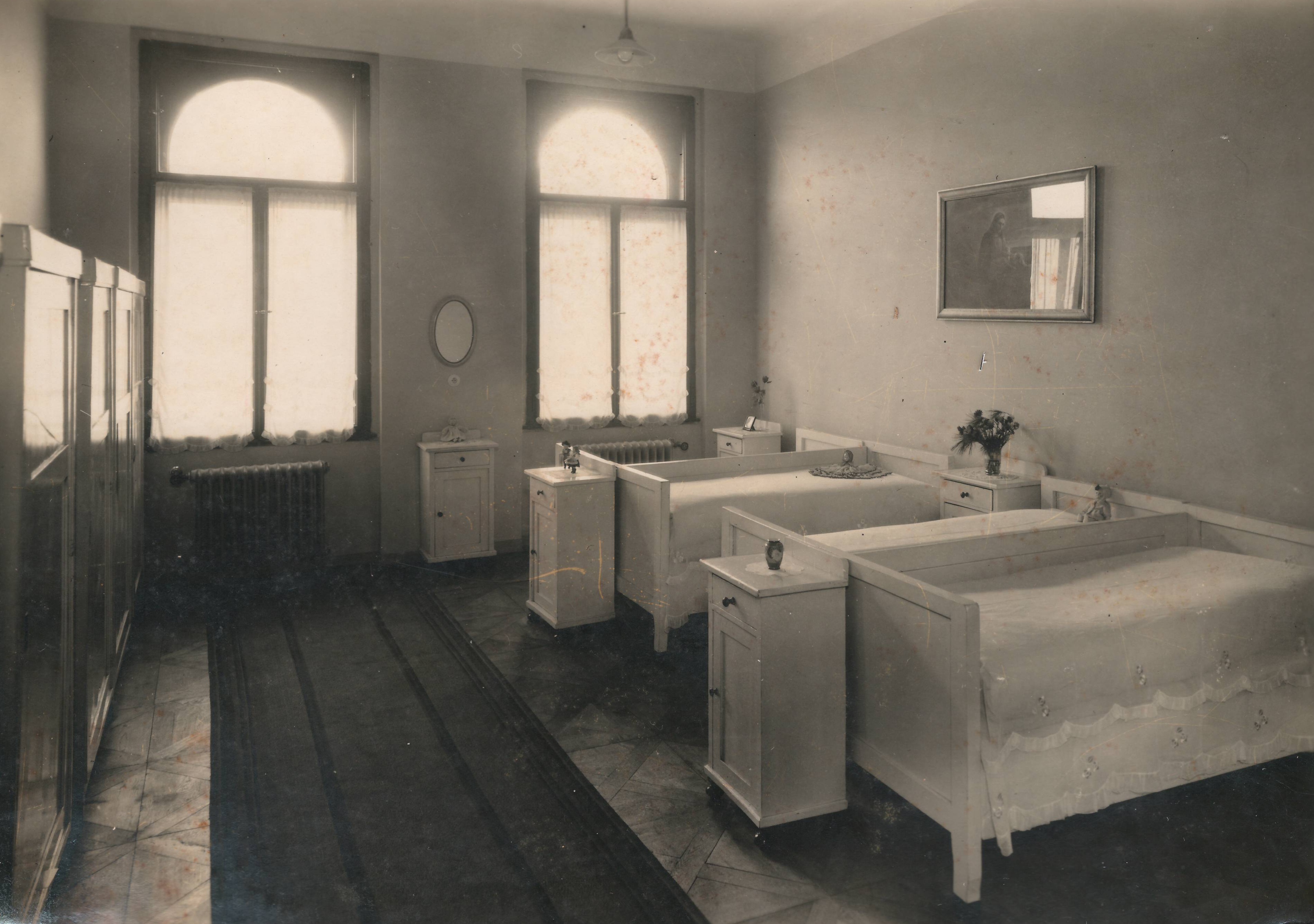
A room on the 4th floor – after the extension built in 1938
Supervisors
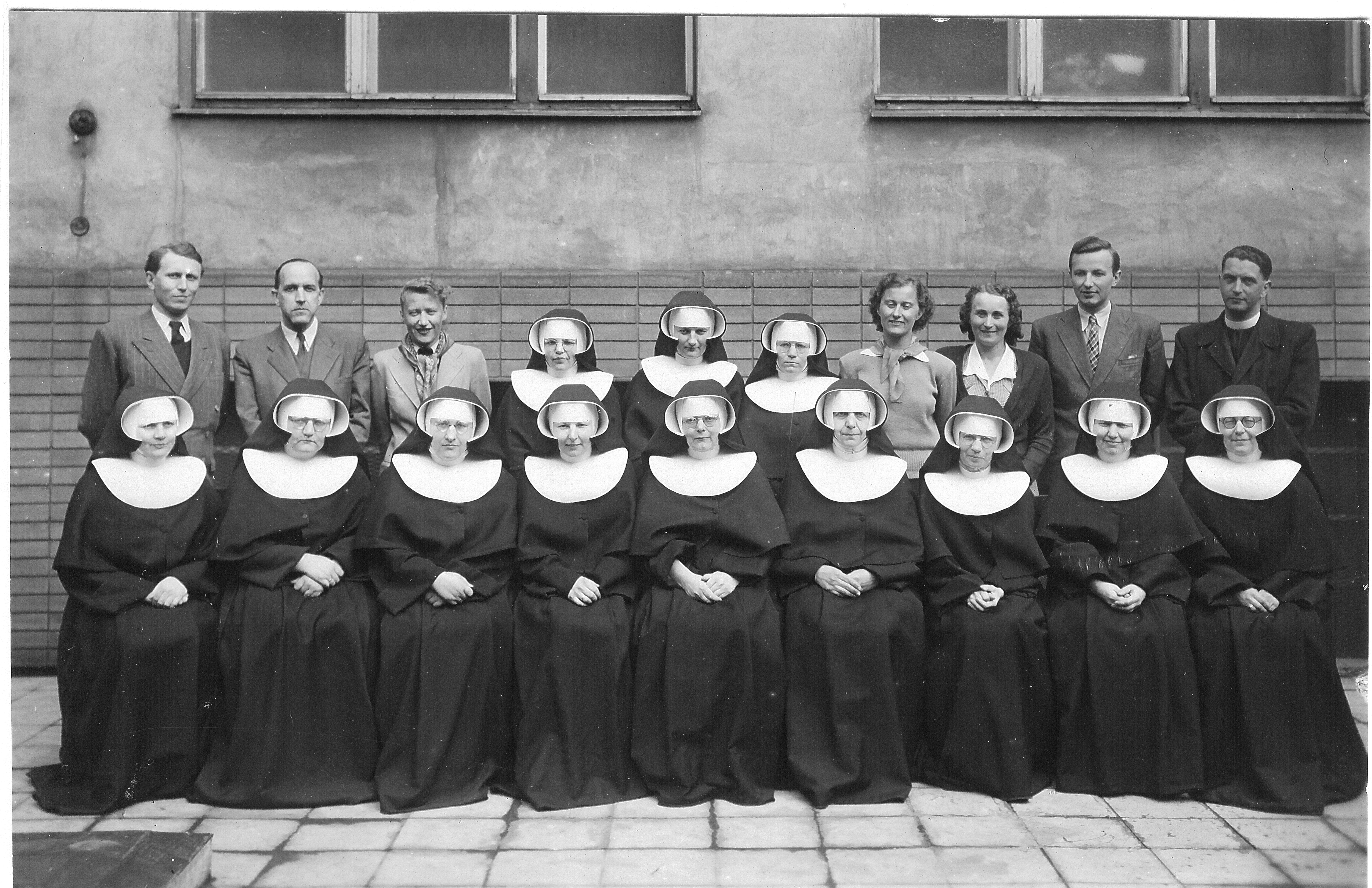
The School Sisters who lived in the building served as supervisors (known at the time as "prefects"). They had their own separate quarters within the building, known as the cloister (after the 1938 reconstruction, this was located in part of the 4th floor and included a chapel). Some of them were simultaneously studying at the grammar school in order to go on to obtain specialist qualifications at a faculty of Charles University and become teachers. (At the time, a university education for women was still a rarity — and it was partly for this reason that the sisters had founded the grammar school, which opened the door to education for many girls.) Students had shared study periods in the study room; older girls were permitted to study in their rooms. When they needed help with their studies, they could turn to the sisters or to older classmates. Many students supplemented their income by tutoring others. The supervisors provided the girls with a safe and secure environment in the big city.
Free Time
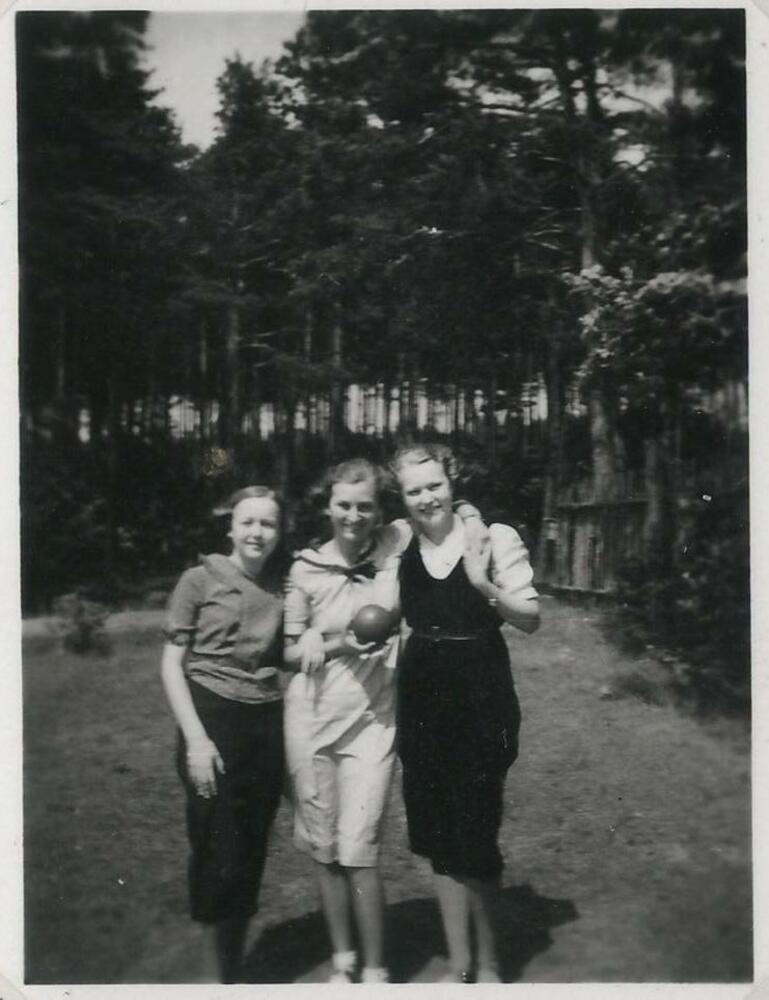
There was no television in those days, and school finished relatively early, so free time was longer — and, surprisingly, often richer and more varied than it is today. The boarding house placed emphasis on a healthy lifestyle (given the frequency of infectious diseases, particularly tuberculosis). The building had its own courtyard garden with pleasant seating under the trees. The programme included walks and excursions. The girls visited beautiful spots around Prague — nearby parks, the Vltava riverbank, Břevnov, Strahov, and Petřín Hill. Day trips were organised by train or coach to the surroundings of Prague, as well as to more distant parts of the country and to Slovakia. They attended group pilgrimages and various Christian and social celebrations. The girls also had the opportunity to visit exhibitions and museums.
Visits to the theatre or cinema were infrequent, but plays were often performed at home. Sometimes the students themselves rehearsed and performed plays with the help of the sisters; at other times the sisters performed for them, or a visiting theatre group from the neighbourhood would put on a show. Each year an Academy was held in which girls from both the grammar school and the boarding house performed. Regular events included a St. Nicholas celebration and a Shrovetide carnival before the beginning of Lent. In the evenings, the girls sang together, lantern slides were projected, occasional home cinema screenings took place, and various lectures and small exhibitions were organised.
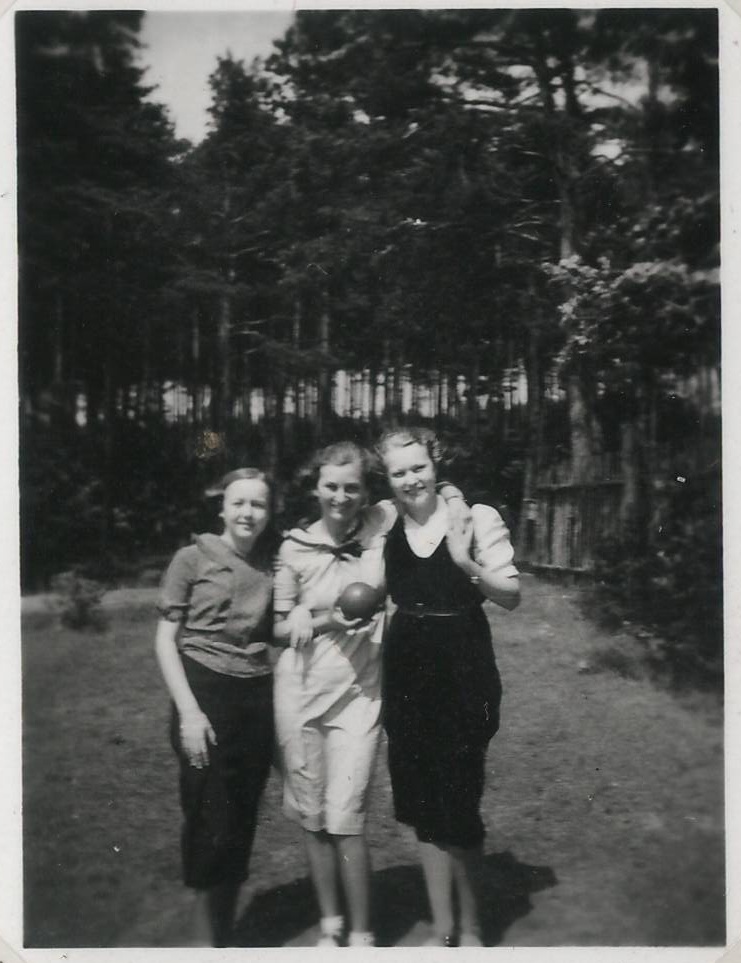
Out for a walk...
The school ball was held in the neighbouring municipal house, and dancing lessons took place in the boarding house. Several times a year the girls and sisters organised charity concerts and bazaars to raise funds not only for the school and the house, but also for underprivileged children, for whom they also held a regular Christmas gift distribution. Girls who were members of the Marian Sodality helped to organise further charitable events across Prague.
The Dark Pages of the Chronicle
The chronicle frequently records outbreaks of infectious diseases (scarlet fever in particular) and various accidents. Occasionally a girl had to be hospitalised, and every year several students died from illnesses that were difficult to treat at the time. On a number of occasions a girl was expelled from the boarding house for theft, truancy, or other misconduct. One night a burglar broke into the house and stole clothing belonging to the students. There was also an incident in which the lock on the main entrance jammed and no one could get in or out — not even a locksmith.
Guests
The house became a refuge for students from other parts of the country. School groups on excursions, participants in social, cultural, and religious events, and visitors to exhibitions all stayed here overnight. On some occasions as many as 200 girls slept here (on straw mattresses brought in for the purpose).
Were you surprised by how lively our house already was so many years ago? Perhaps the glimpses from the old chronicle will serve as an inspiration — for you and for us alike.